This Place Looks Unreal—You Won’t Believe It’s Real
Pamukkale, Turkey, feels like stepping onto another planet. I’m talking white travertine pools cascading down hillsides, filled with turquoise water that sparkles in the sunlight—nature and culture colliding in the most stunning way. Beyond the photogenic terraces, ancient ruins sit right on top, blending Roman history with otherworldly landscapes. If you're chasing beauty *and* meaning, this is it. I’ll walk you through how to experience Pamukkale’s cultural venues in a way that’s authentic, respectful, and totally Instagram-worthy.
First Impressions: Walking into a Natural Dream
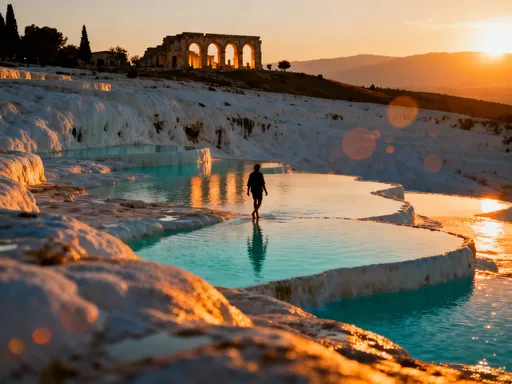
The first glimpse of Pamukkale takes your breath away. As you approach the site from the nearby town of Denizli, the landscape shifts dramatically—what looks like a frozen waterfall of white marble flows down the hillside, catching the light in soft, glowing waves. These are not man-made structures, nor are they illusions. They are natural travertine terraces, formed over thousands of years by mineral-rich thermal waters flowing from underground springs. When the water reaches the surface, it deposits calcium carbonate, slowly building up layers of soft, chalky limestone that harden over time. This continuous process means Pamukkale is still growing, still changing—a living geological wonder.
Visitors are allowed to walk barefoot on designated paths across the terraces, and doing so is an experience unlike any other. The stone feels warm beneath your feet, a reminder that geothermal energy still pulses through the earth below. The texture is smooth yet slightly porous, almost like walking on hardened foam. Each step reveals new patterns—ripples frozen in time, tiny ridges shaped by centuries of flowing water. As the sun moves across the sky, the color of the travertines shifts from pale ivory in the morning to a warm golden hue at sunset. This golden hour transforms the entire site into a dreamlike panorama, where light dances across water and stone in perfect harmony.
Photography here feels almost too easy—every angle offers a postcard-perfect shot. But beyond the visual spectacle lies a deeper appreciation for nature’s quiet craftsmanship. Unlike many tourist destinations that rely on human design, Pamukkale’s beauty emerges entirely from natural forces. There are no artificial dyes, no engineered fountains—just water, minerals, and time. For travelers seeking authenticity, this is a rare place where the real surpasses the imagined. Whether you're standing at the top of the terraces looking down over the cascading pools or crouching to watch sunlight refract through a shallow basin, the sense of awe remains constant.
Because of its surreal appearance, some visitors initially question whether Pamukkale could be real. Social media has amplified this perception, with images so striking they seem digitally enhanced. Yet nothing prepares you for the full sensory experience—the warmth underfoot, the faint mineral scent in the air, the gentle sound of flowing water. It is a place that defies expectation not because it looks fake, but because it exceeds it. In a world where so much beauty is curated or filtered, Pamukkale stands as a testament to nature’s ability to create something truly extraordinary—without any help from humans.
Hierapolis: Where History Meets the Horizon
Perched directly above the travertine terraces lies the ancient city of Hierapolis, a once-thriving Greco-Roman metropolis founded in the 2nd century BCE by the Attalid kings of Pergamon. Strategically located on a plateau overlooking the thermal springs, the city was designed as both a religious sanctuary and a health retreat. Its name, meaning 'Holy City,' reflects its spiritual significance, while its ruins speak to centuries of cultural evolution under Greek, Roman, and Byzantine rule. Walking through Hierapolis today is like stepping into a layered timeline, where every stone tells a story of worship, healing, and daily life in antiquity.
One of the most impressive structures is the well-preserved theater, which seats over 15,000 people. Built during the reign of Emperor Severus in the 2nd century CE, it features a semi-circular orchestra and a towering stage building adorned with intricate carvings. From the upper tiers, visitors can enjoy panoramic views of the surrounding countryside and, in the distance, the gleaming white terraces of Pamukkale. This vantage point creates a powerful connection between nature and architecture—two forces that shaped the identity of Hierapolis. The acoustics remain remarkably clear, allowing even a whisper from the stage to carry to the back rows, a testament to the engineering sophistication of its builders.
Another key site is the Sacred Pool, also known as Cleopatra’s Pool, where warm thermal waters flow among submerged Roman columns and broken capitals. According to legend, Queen Cleopatra once swam here during her visit to the region, though historians debate the accuracy of this tale. What is certain is that the pool became a central feature of the city’s spa culture, attracting visitors from across the empire who believed in the healing properties of the mineral-rich waters. Surrounding the pool are remnants of temples, bathhouses, and colonnaded streets, all constructed using local limestone and marble sourced from nearby quarries.
The necropolis of Hierapolis is one of the largest in Anatolia, stretching along the main road leading out of the city. Lined with hundreds of sarcophagi, many intricately carved with mythological scenes and inscriptions, it offers a poignant glimpse into funerary practices of the time. Some tombs belong to wealthy citizens, while others mark the resting places of freed slaves or military veterans. The presence of so many burial sites underscores the city’s long-standing role as a place of pilgrimage and reflection. Exploring the necropolis evokes a deep sense of continuity—these were real people who lived, loved, and died in a city that once buzzed with activity, now silenced by time.
Hierapolis was more than just a spa town; it was a center of religious worship, particularly dedicated to Apollo, god of healing and prophecy. The Plutonium, a small cave believed to be an entrance to the underworld, was used for ritual ceremonies involving sacred dreams and divine messages. Priests would enter the gaseous chamber to deliver oracles, protected (according to legend) by divine favor. While the site is now closed for safety reasons, its location near the temple complex highlights the spiritual dimension of the city’s relationship with the earth’s hidden energies. This fusion of physical and metaphysical healing made Hierapolis a unique destination in the ancient world—one that continues to resonate with modern visitors seeking both relaxation and meaning.
The Sacred Pool: Floating Among Ruins
Swimming in the Sacred Pool is one of the most memorable experiences Pamukkale has to offer. Fed by a natural hot spring with water temperatures averaging around 36°C (97°F), the pool combines therapeutic warmth with historical immersion. As you float on your back, you’ll find yourself surrounded by fragments of Roman architecture—columns half-submerged, Corinthian capitals resting on the pool floor, and pieces of architraves gently swaying with the current. The water’s clarity allows you to see these relics clearly, creating a surreal underwater museum accessible only to swimmers. Sunlight filters through the surface, casting rippling patterns on the ancient stones below, making the entire scene feel timeless and dreamlike.
The healing reputation of these waters dates back to antiquity. Ancient physicians prescribed baths in the mineral-rich springs to treat ailments ranging from arthritis to skin conditions. Modern science supports some of these claims, noting high concentrations of calcium, magnesium, and bicarbonate in the water, which may contribute to improved circulation and skin health. While the pool should not be seen as a substitute for medical treatment, many visitors report feeling relaxed and rejuvenated after a soak. The combination of buoyancy, warmth, and gentle movement creates a naturally calming effect, easing muscle tension and promoting mental clarity.
Despite its popularity, the Sacred Pool manages to feel intimate. Even when crowded, there is enough space for everyone to find a quiet corner. Most visitors wear modest swimwear—bathing suits or swim trunks—and follow basic etiquette by avoiding loud splashing or diving. Lockers and changing facilities are available nearby, ensuring convenience without compromising comfort. Children are welcome, though supervision is recommended due to depth variations. For those who prefer not to swim, observation decks provide excellent views of the pool and its surroundings.
Conservation efforts play a crucial role in preserving this unique site. In the past, unregulated access led to damage to both the pool structure and submerged artifacts. Today, strict guidelines are enforced to protect the integrity of the ruins. Visitors are discouraged from touching or moving any archaeological remains, and only designated areas are open for swimming. These measures ensure that future generations can continue to enjoy this rare opportunity to connect with history in such a personal way. Floating among the ruins is not just a photo opportunity—it’s a moment of reflection, a chance to feel physically and emotionally immersed in the layers of time that define Pamukkale.
Hidden Corners: Beyond the Main Terraces
While the upper terraces and Hierapolis ruins draw the majority of visitors, some of the most rewarding experiences in Pamukkale lie off the beaten path. The lower travertine basins, located at the base of the hill, offer a quieter alternative to the crowded main pools. These naturally formed basins collect runoff from the higher terraces and create a series of shallow, warm pools nestled among trees and grassy areas. Because they are less accessible and not part of the official walking route, they attract fewer tourists, making them ideal for those seeking solitude or a more relaxed atmosphere.
Another lesser-known trail leads toward the ruins of the Temple of Apollo, situated near the original seismic fault line that powers the thermal springs. Though only fragments of the temple remain, the site holds great historical and geological significance. It was here that the ancient priests interpreted tremors and vapors as messages from the gods, linking the city’s spiritual identity to the earth’s movements. The path offers panoramic views of the entire Pamukkale formation and provides context for how the ancients understood the forces shaping their world. Interpretive signs along the way explain the connection between tectonic activity and the emergence of the springs, enriching the visitor experience with scientific insight.
For those interested in archaeology, a visit to the Denizli Archaeological Museum is highly recommended. Housed in a modern facility, the museum displays artifacts excavated from Hierapolis, including statues, inscriptions, and everyday objects that offer glimpses into domestic life. Among the highlights are a well-preserved statue of Apollo, funerary reliefs depicting family scenes, and a collection of medical instruments used in the ancient spa treatments. By removing these items from the open air, the museum helps protect them from weathering and vandalism while allowing visitors to engage with the culture on a deeper level.
Timing your visit can also open up access to hidden moments. Arriving early in the morning—shortly after opening at 8:00 a.m.—allows you to explore the main terraces before crowds arrive. The soft morning light enhances the natural colors of the travertines, and the relative quiet makes it easier to absorb the serenity of the landscape. Similarly, late afternoon visits offer golden-hour photography opportunities and a chance to witness the site in a different mood, as shadows lengthen and temperatures cool. For photographers, nature lovers, and introspective travelers alike, these quieter times reveal dimensions of Pamukkale that are often missed in the midday rush.
Responsible Visiting: Preserving the Magic
Pamukkale’s delicate ecosystem requires careful stewardship, and responsible tourism is essential to its preservation. The travertine terraces, though they appear solid, are actually quite fragile. The calcium-rich deposits are easily damaged by dirt, oils, and excessive foot traffic. In the past, unrestricted access led to erosion, discoloration, and the formation of unsightly footpaths across the white surfaces. Recognizing the threat, Turkish authorities implemented strict conservation rules in the 1990s, including banning shoes on the terraces and closing certain areas to visitors.
Today, all guests must remove their footwear before entering the main terrace zones. Designated lockers and washing stations are provided at the entrance to ensure feet are clean before walking on the stone. Sitting on the edges of the pools or stepping into restricted basins is strictly prohibited, as these actions disrupt water flow and accelerate degradation. Signs in multiple languages remind visitors of these rules, and park rangers patrol the area to enforce compliance. These measures have led to visible recovery—many terraces that were once dry or discolored have begun to regenerate, proving that conservation efforts can make a real difference.
For travelers, following these guidelines is not just about obedience—it’s about participation in a shared responsibility. Every visitor plays a role in protecting Pamukkale for future generations. Simple actions like staying on marked paths, avoiding littering, and refraining from carving names into stone contribute to the site’s longevity. Bringing a reusable water bottle, towel, and biodegradable sunscreen supports sustainable practices while enhancing personal comfort. Even photographing the site responsibly—without using drones or trespassing into closed areas—helps maintain its integrity.
Instagram culture has brought global attention to Pamukkale, but with that attention comes a duty to represent it authentically. While capturing beautiful images is part of the experience, it should not come at the expense of environmental care. The most meaningful photos are those taken with respect—for the land, the history, and the people who work to preserve it. When visitors approach Pamukkale not just as a backdrop but as a living heritage site, their presence becomes part of its ongoing story rather than a disruption to it.
Local Culture: More Than Just a Photo Op
The experience of Pamukkale extends beyond the archaeological site into the surrounding communities, where traditional Turkish life continues at a gentle pace. The nearby city of Denizli, though modern in many ways, retains strong cultural roots. Local markets offer handwoven cotton textiles—a fitting product, given that “Pamukkale” translates to “Cotton Castle” in Turkish. These lightweight fabrics, known for their softness and breathability, make practical souvenirs and reflect the region’s long history of textile production.
Small family-run cafes near the entrance to the site serve classic Turkish tea in tulip-shaped glasses, brewed strong and served with sugar cubes on the side. Sitting at a wooden table under a shaded awning, sipping tea while watching visitors return from the terraces, offers a moment of calm reflection. Some vendors sell dried fruits, nuts, and homemade pastries, adding to the sensory richness of the experience. Engaging in brief conversations with local guides or shopkeepers can deepen your understanding of the area, offering personal insights that no guidebook can provide.
Cultural immersion doesn’t require elaborate rituals—it can happen in simple exchanges. A smile, a thank you in Turkish (“teşekkür ederim”), or a question about local customs can create connections that enrich the journey. Many residents take pride in sharing their heritage and appreciate visitors who show genuine interest. This human element transforms a scenic visit into a meaningful encounter, reminding us that places like Pamukkale are not just relics of the past but living parts of a continuing story.
Putting It All Together: Planning Your Visit
Planning a trip to Pamukkale requires thoughtful preparation to maximize both enjoyment and impact. The best times to visit are spring (April to June) and fall (September to October), when temperatures are mild, skies are clear, and crowds are smaller. Summer months can be hot, especially in July and August, while winter brings cooler weather and occasional rain, which may limit outdoor activities. Early morning visits are ideal for photography and tranquility, while late afternoon allows for golden-hour views and a more relaxed pace.
Getting to Pamukkale is straightforward from major Turkish cities. Direct buses run daily from Istanbul, Ankara, and Izmir to Denizli, taking between 8 and 12 hours depending on departure point. Alternatively, flying into Denizli Çardak Airport reduces travel time significantly, with domestic connections available from Istanbul and Ankara. From Denizli, local minibuses (dolmuş) operate regularly to the Pamukkale entrance, making the final leg of the journey convenient and affordable.
Entry fees are modest and include access to both the travertine terraces and the Hierapolis Archaeological Site. As of current pricing, adult tickets are available for a reasonable rate, with discounts for students and seniors. The site is open daily from 8:00 a.m. to 7:00 p.m., though hours may vary slightly by season. Most visitors spend between three and five hours exploring, depending on pace and interests. Combining Pamukkale with a day trip to Aphrodisias, another well-preserved ancient city located about two hours away, adds depth to the historical narrative and makes for a fulfilling itinerary.
Packing wisely enhances the experience. Essentials include a swimsuit, water shoes (for areas outside the barefoot zones), a lightweight towel, sunscreen, and a hat for sun protection. A reusable water bottle helps reduce plastic waste, and a small backpack keeps belongings organized. Cameras are encouraged, but remember to respect signage and avoid restricted areas. For those traveling with children, strollers are not practical due to terrain, but younger kids enjoy the novelty of walking barefoot on warm stone.
In the end, Pamukkale is more than a destination—it’s a bridge between natural wonder and human legacy. It invites us to marvel at the forces that shaped the earth, to walk in the footsteps of those who came before, and to do so with care and reverence. Its beauty is undeniable, but its true value lies in what it teaches us about balance—between exploration and preservation, between awe and respect. When you leave Pamukkale, you carry not just photographs, but a deeper understanding of how nature and culture can coexist in harmony. That is a story worth living, and one that stays with you long after the journey ends.