You Won’t Believe These Hidden Gems in Toledo’s Forgotten Corners
Toledo, Spain, isn’t just a postcard of medieval towers and winding alleys—it’s a living museum of architectural fusion hiding in plain sight. I wandered far from the cathedral crowds and found quiet courtyards, Moorish arches, and Renaissance secrets most travelers miss. If you think you’ve seen Toledo, think again. The real magic? It’s carved into doorways no guidebook mentions. Beyond the UNESCO World Heritage status and the well-trodden path to the Cathedral of Santa María, there lies a quieter, more intimate city—one shaped by centuries of layered civilizations. This is a place where stone whispers stories of coexistence, craftsmanship, and quiet resilience. To truly know Toledo is not just to visit, but to observe, to pause, and to look beyond the obvious.
Beyond the Postcard: Seeing Toledo Through a Different Lens
Toledo’s fame rests on its skyline—dominated by the grand cathedral, the Alcázar fortress, and the Tagus River embracing the hilltop city like a protective arm. These landmarks are undeniably impressive and draw millions each year. Yet, focusing solely on them risks reducing Toledo to a series of photo opportunities rather than a living, breathing historical tapestry. The city’s deeper identity is not confined to its major monuments but lives in the details: the curve of a forgotten arch, the texture of weathered stonework, the way sunlight filters through a courtyard window at midday. When travelers step away from the main plazas and follow narrow lanes that seem to lead nowhere, they begin to encounter a Toledo that time has gently overlooked.
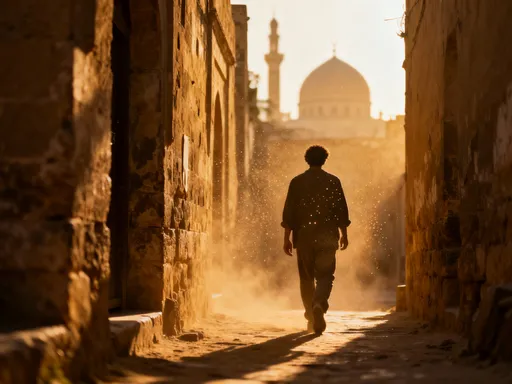
What makes this shift in perspective so powerful is the contrast it reveals. The central thoroughfares buzz with tour groups, souvenir shops, and café chatter. But just a few steps down an unmarked alley, silence descends. The sound of footsteps on cobblestones replaces the hum of conversation. The air grows cooler, shaded by centuries-old walls. This is where Toledo’s authenticity emerges—not in grand gestures, but in quiet persistence. One moment you’re on a postcard; the next, you’re standing in a centuries-old passageway where laundry hangs between buildings and an elderly woman waters geraniums in a clay pot. These are the spaces where history isn’t displayed behind glass but lived in, cared for, and passed down.
For many visitors, arriving in Toledo means coming with expectations shaped by travel brochures and social media. The surprise comes not from what is seen, but from what is missed until you slow down. It’s the realization that the city’s soul isn’t in its monuments alone, but in the way its streets unfold like a secret only revealed to those who wander without a strict itinerary. This kind of travel rewards curiosity and patience. It asks you to notice—not just look. And in doing so, it transforms a simple visit into a personal discovery, one that lingers long after the photographs fade.
The Soul of Mudejar: Where Christian, Muslim, and Jewish Styles Collide
Nowhere is Toledo’s layered history more evident than in its Mudejar architecture—a unique blend of Islamic design executed under Christian rule. The term Mudejar refers to Muslims who remained in Spain after the Christian reconquest, and their artistic influence endured in craftsmanship, decorative motifs, and construction techniques. In Toledo, this legacy is not confined to museums or ruins; it is embedded in the very fabric of the city. From modest doorways to the interiors of former synagogues, Mudejar artistry speaks of a time when three cultures—Christian, Muslim, and Jewish—coexisted, influencing one another in subtle but lasting ways.
One of the most striking features of Mudejar design is its intricate plasterwork, known as yesería. Delicate geometric patterns, interlacing stars, and stylized floral motifs cover walls and ceilings, creating a sense of infinite repetition that reflects Islamic artistic principles. These elements are not merely decorative; they carry symbolic weight, representing the divine order and the infinite nature of creation. In Toledo, such craftsmanship can be found in places like the Church of San Román, where a Mudejar-style ceiling rises above the altar, blending Christian liturgy with Islamic artistry. Similarly, the Synagogue of Santa María la Blanca—originally built as a Jewish house of worship—displays horseshoe arches and octagonal pillars that echo the Great Mosque of Córdoba, a testament to shared architectural vocabulary across religious lines.
The coexistence of these traditions was not always peaceful, but in Toledo, it left behind a physical legacy of dialogue. Tilework, known as azulejos, adorns fountains and courtyard walls with cobalt blues, earthy reds, and creamy whites arranged in rhythmic patterns. Wooden ceilings, called artesonado, feature interlocking beams carved into complex star shapes, a hallmark of both Moorish and later Spanish craftsmanship. These details were not reserved for religious buildings alone. Even in private homes, Mudejar influence appears in window grilles, interior courtyards, and decorative friezes. To walk through Toledo is to witness a city where faith and form once intertwined, creating a visual language that transcends religious boundaries.
Understanding Mudejar architecture is not just about appreciating beauty—it’s about recognizing the resilience of culture. Even after the expulsion of Jews and Muslims in the late 15th century, their artistic contributions remained, preserved in stone and wood. This enduring presence invites reflection: how ideas survive displacement, how aesthetics outlive conflict, and how beauty can be a quiet act of resistance. In appreciating these details, visitors engage with a deeper narrative—one of adaptation, survival, and unexpected harmony.
Courtyards You Have to See to Believe
Among Toledo’s most enchanting secrets are its hidden patios—interior courtyards tucked behind unassuming doors, accessible only to those who know where to look or are lucky enough to stumble upon them. These spaces, often invisible from the street, offer a glimpse into a domestic architecture shaped by climate, culture, and centuries of tradition. Unlike the grand public squares, these courtyards are intimate, serene, and deeply personal. They serve as private oases, where families gather, plants flourish, and the passage of time feels slower, gentler.
Many of these patios belong to private residences, their existence hinted at only by a wrought-iron gate or a slightly ajar wooden door. Some are open during cultural events like the annual Open Patios of Toledo, when homeowners welcome visitors to explore their inner sanctuaries. Others are part of small cultural centers, restored historic homes, or boutique guesthouses that preserve the original layout. What they share is a common design philosophy: inward focus. In a city built for defense and privacy, the courtyard became the heart of the home, a place protected from the outside world yet open to the sky.
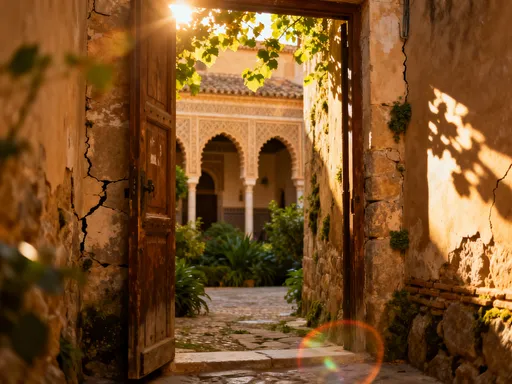
Imagine stepping through a narrow doorway and emerging into a sun-drenched space, surrounded by two or three levels of arched walkways. Jasmine climbs the walls, its scent mingling with the earthy aroma of potted herbs. Water trickles from a small fountain in the center, its sound softening the urban hum. The floors are paved with irregular stone tiles, worn smooth by generations of footsteps. Above, wooden beams support upper balconies, their railings adorned with ironwork that casts delicate shadows in the afternoon light. These courtyards are not designed for spectacle but for contemplation—a space to sit with a cup of tea, read a book, or listen to the rustle of leaves.
Architecturally, these patios reflect a blend of practicality and artistry. The central open space allows light and ventilation to penetrate deep into the house, crucial in Toledo’s hot summers. The surrounding arcades provide shade and protection from rain. Decorative elements—tile borders, carved stonework, painted ceiling beams—add visual richness without overwhelming the simplicity of the space. In some courtyards, remnants of older structures are visible: a Roman column repurposed as a support, a medieval inscription carved into a lintel, or a Visigothic capital embedded in a wall. These layers tell a story of continuous habitation, where each generation added its mark without erasing the past.
For the modern traveler, these courtyards offer more than aesthetic pleasure—they provide a model of living that values slowness, connection, and quiet beauty. In a world dominated by speed and visibility, Toledo’s hidden patios remind us that some of the most meaningful spaces are those meant to be experienced, not displayed. They invite a different kind of tourism—one based on respect, presence, and the willingness to look beyond the surface.
Renaissance Whispers in Stone and Iron
While Toledo is often celebrated for its medieval and Islamic heritage, the Renaissance period left its own subtle but significant mark on the city’s streets. Unlike the flamboyant palaces of Florence or the grand plazas of Madrid, Toledo’s Renaissance influence is understated, woven into the fabric of everyday architecture. It appears in the symmetry of a townhouse façade, the delicate scrollwork of an iron balcony, or the sculpted lintel above a doorway. These elements reflect a shift in artistic sensibility—one that valued proportion, classical references, and human-centered design, even as the city remained deeply rooted in its medieval character.
One of the most visible Renaissance features in Toledo is the proliferation of wrought-iron balconies. These are not mere functional additions but works of art, forged by local blacksmiths who blended Italian design influences with regional craftsmanship. The ironwork often features floral motifs, scroll patterns, and geometric shapes, each piece custom-made for its building. Unlike the uniform railings of modern construction, these balconies are unique, bearing the imprint of the artisan’s hand. They project from upper floors, offering residents a private vantage point over the narrow streets below. In the morning light, their shadows stretch across the opposite walls, adding rhythm and texture to the urban landscape.
Equally significant are the sculpted stone elements that adorn windows and doorways. Lintels—horizontal beams above entrances—are frequently carved with coats of arms, mythological figures, or classical pilasters, signaling the status and tastes of the original owners. These details are easy to miss, especially when walking quickly through the old quarter. Yet, they reveal a city in transition, where noble families and wealthy merchants sought to align themselves with the cultural ideals of the Renaissance while still honoring local traditions. The result is a hybrid style—neither purely Spanish nor entirely imported, but distinctly Toledan.
Residential buildings from the 16th and 17th centuries often feature symmetrical façades, balanced window placement, and harmonious proportions, hallmarks of Renaissance design. However, these homes were adapted to Toledo’s steep terrain and narrow plots, resulting in vertical rather than horizontal expansion. The ground floors were typically used for storage or workshops, while living quarters occupied the upper levels. This vertical arrangement, combined with Renaissance detailing, created a unique architectural identity—one that balanced elegance with practicality. Even today, many of these buildings remain in use, their façades preserved through careful restoration and municipal regulations that protect the city’s historical integrity.
The quiet presence of Renaissance architecture in Toledo speaks to a broader truth about cultural evolution: change does not always come with fanfare. Sometimes, it arrives in small details—a curve in an iron railing, a carefully placed window, a coat of arms carved in stone. These whispers of a new era remind us that progress and tradition can coexist, each enriching the other without erasing what came before.
Following the Water: Ancient Aqueducts and Forgotten Fountains
Toledo’s dramatic hilltop location presented a constant challenge: how to supply water to a growing population without modern infrastructure. The answer lies in an ingenious network of aqueducts, cisterns, and fountains—many of which remain in use or visible today. While the Roman aqueduct of Segovia is more famous, Toledo’s hydraulic systems are no less remarkable, blending engineering precision with artistic expression. These structures were not merely functional; they were designed with beauty in mind, reflecting the belief that utility and aesthetics should coexist.
One of the most fascinating remnants is the Acequia del Arrabal, a medieval water channel that once carried fresh water from nearby springs into the city. Sections of this aqueduct are still traceable along the lower slopes of Toledo, where stone arches rise from the hillside, partially buried by time and vegetation. Walking along its path offers a rare perspective—one that moves beyond the city’s skyline to appreciate the hidden systems that sustained it. The channel was carefully engineered to maintain a gentle slope, ensuring a steady flow without pumps or electricity. Along its route, small distribution points allowed residents to collect water, while overflow areas fed gardens and public fountains.
Within the city, fountains served both practical and symbolic purposes. They provided drinking water, supported laundry and cooking needs, and created gathering spaces for neighbors. Many were adorned with carved stone basins, heraldic symbols, or religious inscriptions, turning utilitarian objects into civic art. The Fountain of the Herrería, located near the former Jewish quarter, is one such example. Though modest in size, it features a beautifully carved spout and a surrounding wall embedded with ceramic tiles. Today, it no longer functions as a water source, but it remains a quiet landmark, a reminder of daily life in centuries past.
Equally important were the cisterns—underground reservoirs that stored rainwater collected from rooftops and courtyards. These were essential during dry seasons and sieges, ensuring a reliable supply even when external sources were cut off. Some cisterns have been preserved beneath historic buildings and are occasionally accessible during guided tours. Descending into one is like stepping into the city’s memory: the air is cool, the walls damp, and the silence profound. The craftsmanship is evident in the precision of the stonework and the acoustics of the space, where a single drop of water echoes like a heartbeat.
These water systems are more than relics; they are testaments to foresight, community planning, and respect for nature’s rhythms. In an age of instant gratification and disposable infrastructure, Toledo’s ancient hydraulic network offers a lesson in sustainability and resilience. It reminds us that true progress is not measured by speed or scale, but by the ability to meet human needs with intelligence, care, and beauty.
Why Getting Lost is the Best Plan
In a city as dense and labyrinthine as Toledo, the most rewarding journeys are often unplanned. While guidebooks and maps have their place, they can also create a false sense of control, leading travelers down the same well-worn paths. The real magic of Toledo reveals itself not through schedules, but through serendipity—when you turn a corner without knowing where it leads and find yourself in a sunlit alley, a quiet plaza, or a doorway that opens into a centuries-old courtyard. Getting lost, in the best sense, means surrendering to the city’s rhythm and allowing it to guide you.
Walking without a fixed destination encourages a different kind of attention. You begin to notice textures—the way light plays on aged stone, the sound of wind through narrow passages, the scent of baking bread from a hidden bakery. You start to read the city like a book, where each building, street sign, and worn step tells a fragment of a larger story. This kind of travel is slower, more immersive, and ultimately more meaningful. It transforms sightseeing into discovery, and observation into connection.
Safety is naturally a concern, especially in unfamiliar environments. But Toledo’s old quarter is compact, well-maintained, and generally safe for pedestrians. Sticking to well-lit streets, avoiding isolated areas after dark, and carrying a basic map or offline navigation app ensures that wandering remains enjoyable rather than risky. The key is to move with awareness—pausing to observe, listening to your surroundings, and respecting private spaces. Knocking on a door to ask permission before entering a courtyard, for instance, is not only courteous but often welcomed by residents proud of their heritage.
Some of the most memorable moments come from unexpected encounters. An elderly shopkeeper might invite you to see the interior of a 16th-century house passed down through generations. A local artist might offer a glimpse into a studio tucked behind a nondescript doorway. These interactions, brief as they may be, add depth to the experience, grounding the city’s history in living memory. They remind us that Toledo is not a museum frozen in time, but a community where past and present coexist. By embracing the unknown, travelers gain not just sights, but stories—ones that stay with them long after the journey ends.
Carrying Toledo With You: Architecture That Stays in Your Mind
Leaving Toledo, one does not simply carry photographs or souvenirs. One carries impressions—of light on stone, the echo of footsteps in a vaulted corridor, the scent of jasmine in a hidden courtyard. These sensory memories form a quiet imprint, shaping how one sees not just other cities, but the world. Toledo teaches the value of looking closely, of appreciating what is overlooked, and of understanding that beauty often resides in the details. Its architecture, layered with centuries of history, craftsmanship, and cultural exchange, becomes a lens through which to view all places—not as destinations, but as living narratives.
The lasting impact of Toledo lies in its ability to challenge assumptions. It shows that grandeur is not always loud, that history is not always preserved behind ropes, and that the most meaningful experiences often come without fanfare. The horseshoe arch in a quiet alley, the iron balcony forged by hand, the fountain fed by a forgotten spring—these are not just relics, but invitations to slow down, to observe, and to connect. They remind us that cities are not built in a day, nor understood in one visit. They unfold gradually, revealing themselves to those willing to walk slowly and look deeply.
For the thoughtful traveler, Toledo becomes a model of mindful exploration. It encourages a way of moving through the world that values presence over productivity, curiosity over convenience, and connection over consumption. In a time when travel can feel rushed and transactional, Toledo offers an alternative—a reminder that the deepest journeys are not measured in miles, but in moments of wonder. And when you return home, you may find yourself noticing the craftsmanship in your own neighborhood, the stories embedded in old buildings, the quiet beauty of everyday spaces. That is the true gift of Toledo: it changes how you see, long after you’ve left its streets behind.