You Gotta See These Wild Edinburgh Buildings – Mind-Blowing Architecture Everywhere
Edinburgh isn’t just history and haggis—its architecture will stop you mid-step. One minute you’re walking down a cobbled lane, the next you’re staring up at a gothic spire or a futuristic cultural hub. I didn’t expect to be so stunned by the contrast: medieval stone towers beside bold modern designs, all layered like a visual storybook. This city doesn’t just preserve the past—it reimagines it. Let me take you through the most unexpected, jaw-dropping structures that make Edinburgh’s skyline unforgettable.
First Impressions: The Skyline That Tells a Story
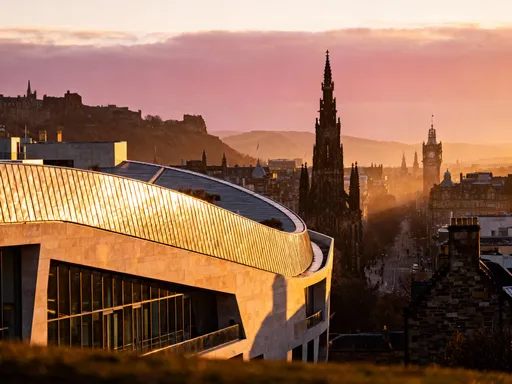
Arriving in Edinburgh, whether by train, car, or foot, means encountering a skyline unlike any other in Europe. Rising above the city, perched on an ancient volcanic crag, Edinburgh Castle stands as a sentinel of history—its turrets and ramparts dominating the horizon with a presence that feels both imposing and inviting. To the east, the Old Town unfurls in a maze of dark stone rooftops, chimney stacks, and church spires piercing the sky like fingers pointing toward the heavens. Yet just beyond this medieval silhouette, a radically different form emerges: the angular, timber-clad curves of the Scottish Parliament building in Holyrood. This striking juxtaposition—centuries-old fortress beside a 21st-century architectural statement—is not accidental. It is, in fact, the soul of Edinburgh’s urban identity.
What sets Edinburgh apart from other historic capitals is its refusal to freeze time. While cities like Prague or York preserve their past with reverence, Edinburgh engages in a continuous architectural dialogue between eras. The city doesn’t hide its modernity behind heritage facades; instead, it allows new designs to speak boldly, creating a dynamic tension that feels alive and evolving. The contrast is most evident when standing at the foot of the Royal Mile, looking west toward the castle, then turning east toward the glass-and-steel Scottish Parliament. This visual conversation between old and new is not jarring—it’s intentional, thoughtful, and deeply symbolic of a nation that honors tradition while embracing progress.
The skyline also reveals the city’s dramatic topography. Built across steep hills and deep valleys, Edinburgh’s architecture adapts to the land in ways that surprise and delight. Buildings seem to climb the slopes, cascading down in terraces, their roofs stepping like stairs toward the sea. This verticality gives the city a theatrical quality, as if every street corner offers a new stage set. From Calton Hill to Arthur’s Seat, elevated viewpoints reward visitors with panoramic scenes where Gothic, Georgian, and contemporary styles coexist in harmony. It’s a city designed to be seen from above—and one that demands you look up.
Old Town’s Gothic Bones: Walking Through Centuries
Step into Edinburgh’s Old Town, and you enter a world shaped by medieval ambition and cramped urban living. The narrow, cobbled streets known as “closes” twist between towering stone tenements that rise five, six, even seven stories high. These vertical homes, built to conserve space on the narrow ridge of the Royal Mile, lean slightly with age, their windows staggered like crooked teeth. Walking beneath them, you feel the weight of centuries—the cool shadow of stone walls, the echo of footsteps on ancient paving, the faint scent of damp earth and old timber. It’s not just a neighborhood; it’s a living museum of urban survival and craftsmanship.
At the heart of this labyrinth stands St Giles’ Cathedral, a masterpiece of late Gothic architecture. Its crown spire, known as the “Steeple,” rises above the Royal Mile like a stone lantern, visible from miles away. Inside, the cathedral’s soaring nave and fan-vaulted ceiling create a sense of awe, while the Thistle Chapel—a small but exquisitely carved sanctuary—displays some of the finest woodwork in Scotland. Every inch of the building tells a story: carved saints, heraldic beasts, and intricate tracery that captures light in ever-changing patterns. St Giles’ was not just a place of worship; it was the spiritual and political center of the Scottish Reformation, where John Knox once preached. Its architecture reflects that legacy—grand, resilient, and deeply rooted in national identity.
Nearby, the Tron Kirk, though no longer used for regular services, stands as a testament to Edinburgh’s layered history. Once a bustling parish church, it later served as a salt warehouse, a police station, and even a youth hostel. Its twin steeples and robust stone facade remain intact, a reminder of the city’s ability to repurpose rather than demolish. Today, it hosts cultural events and exhibitions, proving that historic buildings can evolve without losing their character. As you wander through the closes and wynds branching off the Royal Mile, you’ll notice carved grotesques peering from gables, iron boot-scrapers embedded in doorways, and hidden courtyards that feel like secrets whispered between stones. These details aren’t just decorative—they are the fingerprints of the people who lived, worked, and dreamed here for generations.
New Town’s Elegant Symmetry: A Georgian Dream
Just a short walk north from the Old Town, the city transforms. The narrow, winding lanes give way to broad, tree-lined avenues and perfectly proportioned squares. This is the New Town, a visionary urban plan conceived in the 18th century as a response to the overcrowding and squalor of the medieval city. Designed during the height of the Scottish Enlightenment, it reflects the era’s ideals of reason, order, and harmony. Architects like James Craig and Robert Adam shaped a district where symmetry reigns, where every building contributes to a grand aesthetic balance. In 1995, UNESCO recognized its significance by designating it a World Heritage site—a rare honor shared with only a handful of urban areas worldwide.
The heart of the New Town lies in its crescents and circuses—architectural forms borrowed from classical Rome and reimagined for a modern age. Charlotte Square, designed by Robert Adam, is perhaps the most iconic. Its uniform facades, adorned with pilasters, pediments, and delicate stonework, create a sense of calm elegance. The square’s central garden, enclosed by iron railings, offers a peaceful retreat, while the buildings themselves house embassies, private residences, and cultural institutions. What makes Charlotte Square remarkable is not just its beauty, but its coherence. Unlike the organic chaos of the Old Town, this space was meticulously planned, every window and door placed with mathematical precision. It is architecture as philosophy—a physical manifestation of Enlightenment thinking.
Yet the New Town is not a sterile museum piece. It breathes with life. Residents walk dogs along Moray Place, cafes spill onto the pavement in Stockbridge, and independent bookshops line the streets of Dean Village. The Georgian townhouses, once homes to wealthy merchants and intellectuals, now serve as offices, galleries, and boutique hotels. This adaptive reuse ensures that the district remains vibrant, not frozen in time. The contrast with the Old Town is striking: where the south side of the city feels vertical and intimate, the New Town feels horizontal and expansive. One invites you to look up; the other encourages you to stroll, to breathe, to take in the open sky.
The Scott Monument: Victorian Drama on a Grand Scale
Rising from the eastern edge of Princes Street Gardens, the Scott Monument is one of Edinburgh’s most polarizing landmarks. To some, it is a masterpiece of Gothic revival; to others, an overwrought folly. Standing at 200 feet tall, it is the largest monument in the world dedicated to a writer—Sir Walter Scott, the novelist who helped define Scotland’s literary identity. Completed in 1846, the structure is a riot of stone lacework, with 68 narrow spires, 93 gargoyles, and a network of internal staircases that spiral like a stone corkscrew. Its silhouette against the sky is unmistakable—dramatic, almost excessive, yet undeniably captivating.
To truly appreciate the Scott Monument, you must climb it. The ascent is not for the faint of heart—287 narrow, winding steps lead to an observation platform encircled by statues of characters from Scott’s novels. Along the way, you pass through dimly lit chambers where the stone seems to press in from all sides, the air cool and still. But the reward is worth the effort: a 360-degree view of the city, from the castle to the Firth of Forth, with the New Town spreading out like a geometric dream. From this height, you can see how the monument anchors the city’s east-west axis, linking the old and new in a single, dramatic gesture.
The monument’s design, by architect George Meikle Kemp, was inspired by Melrose Abbey, but amplified to an almost surreal degree. Its intricate carvings include scenes from Scott’s works, as well as portraits of other literary figures. The level of detail is staggering—every finial, every tracery pattern, every sculpted face tells a story. While some critics have dismissed it as excessive, that very excess is part of its charm. In a city of restraint and proportion, the Scott Monument is a burst of romantic emotion, a celebration of imagination and narrative. It reminds us that architecture can be more than functional or beautiful—it can be poetic.
Modern Marvels: The Scottish Parliament and Beyond
If the Scott Monument represents the height of Victorian romanticism, the Scottish Parliament building embodies 21st-century democratic idealism. Opened in 2004, the structure was designed by Spanish architect Enric Miralles, whose vision was to create a building that felt rooted in the Scottish landscape and people. The result is a radical departure from traditional government architecture. Instead of columns and domes, the Parliament features undulating timber roofs that resemble upturned boats or rolling hills, walls of honey-colored stone, and large windows that flood the interior with natural light. The debating chamber, with its asymmetrical layout and wooden ceiling shaped like a dandelion seed head, is designed to encourage openness and collaboration.
The building’s most striking feature is its integration with the surrounding environment. A ramp leads from the city up to the entrance, symbolizing accessibility. The roof extends into the park, blurring the line between architecture and nature. Inside, materials were sourced locally—granite from Aberdeen, oak from sustainable forests, and even sheep’s wool used for insulation. Every design choice reflects a commitment to sustainability, transparency, and Scottish identity. Controversial upon completion for its cost and unconventional form, the Parliament has since been embraced as a symbol of modern Scotland—a nation that values innovation as much as tradition.
But the Parliament is not alone in redefining Edinburgh’s architectural language. The Central Library on George IV Bridge has undergone a sensitive redevelopment, blending its 19th-century facade with a modern interior that includes digital archives, community spaces, and energy-efficient systems. Similarly, the Dunard Centre, currently under construction near St Andrew Square, promises to be a world-class venue for music and performance, designed to complement rather than compete with its historic neighbors. These projects show that Edinburgh is not content to rest on its heritage. It continues to grow, to experiment, to build—always with an eye on context, continuity, and craftsmanship.
Hidden Layers: Quirky Buildings Off the Beaten Path
Beyond the major landmarks, Edinburgh is full of architectural surprises waiting to be discovered. Turn down a quiet lane in the Old Town, and you might stumble upon the curved, copper-clad facade of The Hub—originally built as a church, now serving as the headquarters for the Edinburgh International Festival. Its spire, designed to be the tallest in the city, offers panoramic views and a striking example of how historic buildings can be repurposed for contemporary cultural life. Nearby, Advocate’s Close hides a hidden courtyard, where 17th-century legal chambers still bear carved inscriptions of the lawyers who once worked there. These spaces, often overlooked by tourists, pulse with quiet history.
Another gem is the Writers’ Museum in Lady Stair’s Close, tucked behind a grand stone archway. Housed in a 17th-century townhouse, the museum celebrates Robert Burns, Sir Walter Scott, and Robert Louis Stevenson. But it’s the building itself that captivates—a spiral staircase, hidden alcoves, and a tranquil garden where ivy climbs ancient walls. Inside, a surrealist sculpture of Burns’ head, composed of fragmented stone, challenges traditional notions of memorial art. It’s a small detail, but one that speaks volumes about Edinburgh’s willingness to blend reverence with creativity.
Then there are the modern interventions that play with perception. The Scottish National Gallery of Modern Art, set in elegant 18th-century mansions, features a series of outdoor sculptures that contrast sharply with their surroundings—from a giant pair of red lips to a bronze figure balancing on a globe. These pieces don’t clash with the architecture; they converse with it, inviting visitors to see the old through a new lens. Even the city’s signage and street furniture have been thoughtfully designed, using traditional materials with clean, modern lines. These subtle touches prove that architecture isn’t just about buildings—it’s about the entire sensory experience of a place.
Why Architecture Makes the Trip: A City That Lives Through Its Design
What makes Edinburgh unforgettable is not just its famous sites, but the way its architecture shapes every moment of your visit. This is a city that demands attention—to look up, to slow down, to notice the curve of a roofline or the pattern of a cobblestone. Its buildings are not mere backdrops; they are active participants in the story of the city. From the fortress on the rock to the glass walls of the modern library, each structure contributes to a narrative of resilience, reinvention, and cultural pride.
The true magic lies in the dialogue between old and new. Edinburgh does not treat its past as a relic to be preserved behind glass. Instead, it allows history to breathe, to interact with the present, to inspire the future. A 12th-century castle stands beside a parliament built for the digital age. A Gothic cathedral shares the skyline with a monument to literature. A Georgian square hosts a pop-up market of local artisans. This continuity is not accidental—it is the result of thoughtful urban planning, community engagement, and a deep respect for place.
For travelers, especially those who value depth and authenticity, Edinburgh offers a rare experience. It is a city where you can feel the weight of centuries in the stone beneath your feet, yet also witness the pulse of contemporary life in its galleries, cafes, and public spaces. Its architecture invites reflection: on time, on identity, on the ways we shape and are shaped by our environments. So when you visit, don’t just follow the tour routes. Wander. Look up. Let the buildings guide you. Because in Edinburgh, every wall has a story, every spire a song, and every street corner a chance to be amazed. This isn’t just a city to see—it’s a city to feel, to remember, to carry with you long after you’ve left its cobbled lanes behind.