You Won’t Believe These Hidden Cultural Gems in Incheon
When I first thought of Incheon, I pictured just an airport and a port city. But digging deeper, I discovered something totally unexpected—secret cultural spots where tradition breathes through alleyways, old houses, and local art. This isn’t the typical tourist trail. It’s the real, quiet soul of Korea. If you're craving authentic experiences beyond Seoul, you gotta check out what Incheon truly hides beneath the surface.
Reimagining Incheon: Beyond Transit and Tarmac
For most international travelers, Incheon exists as a blur of duty-free shops and departure gates. As the gateway to South Korea, the city is often reduced to its sprawling airport and bustling seaport—functional spaces designed for movement, not lingering. Yet this perception overlooks a deeper truth: Incheon is not merely a passage, but a place of layered history and cultural resilience. The city has long served as a meeting point between Korea and the outside world, dating back to the 1883 opening of its port, which welcomed foreign trade, ideas, and communities. Over time, modern development reshaped its skyline, but within its neighborhoods, echoes of the past remain.
Shifting how we see Incheon transforms the experience of visiting it. Instead of rushing toward Seoul on the high-speed train, travelers who pause begin to notice subtle signs of identity—a weathered stone wall, a hand-painted sign in Chinese characters, a narrow lane lined with century-old houses. These details are not accidental; they are fragments of a living narrative. Urban renewal projects have carefully balanced progress with preservation, ensuring that historic districts are not erased but revitalized. This thoughtful integration allows visitors to walk through time, from colonial-era architecture to contemporary art spaces, all within a single afternoon.
What makes this shift in perspective so valuable is the way it aligns with the growing desire for meaningful travel. More people, especially women between 30 and 55 who travel for both relaxation and enrichment, seek connections beyond surface-level sightseeing. They want to understand how communities live, remember, and celebrate. Incheon offers that opportunity in a way that feels unhurried and genuine. There are no massive tour groups crowding its quieter corners, no timed entries or ticket queues. Here, exploration unfolds naturally, guided by curiosity rather than schedules. By reimagining Incheon not as a stopover but as a destination, travelers open themselves to stories that are personal, poignant, and deeply human.
Wolmido’s Quiet Past: More Than Just a Boardwalk
Just a short ride from downtown Incheon lies Wolmido Island, a place many know for its seaside promenade and amusement park rides. But beyond the carousel music and snack stands, a quieter history lingers in the island’s streets and structures. Once a strategic military location during the Korean War, Wolmido has transformed over decades into a symbol of recovery and local pride. Its cultural significance isn’t shouted from billboards—it’s whispered in the faded murals along alley walls, the retro-style cafes serving sweet red bean buns, and the small performance halls where amateur theater groups rehearse traditional plays.
Walking through Wolmido today, one can trace the layers of change. Old black-and-white photographs displayed in community centers show families rebuilding homes after the war, while recent public art installations depict scenes of everyday life—fishermen mending nets, children flying kites, elders sharing tea. These visual stories honor continuity. The island’s residents have preserved their identity not by resisting change, but by weaving memory into the present. A former storage warehouse now hosts poetry readings; a corner shop run by the same family for three generations still sells homemade kimchi to regulars who call the owner “ajumma,” a respectful term for an older woman.
For the mindful traveler, Wolmido offers a chance to slow down and absorb the rhythm of local life. A suggested walking route begins at the ferry terminal, winds through the market streets, and ends at the quieter northern edge of the island, where the sound of waves replaces city noise. Early mornings are ideal—fewer crowds, soft light, and the chance to chat with vendors setting up their stalls. This is not a destination for thrill-seekers, but for those who appreciate the beauty of ordinary resilience. In a world that often celebrates the new and flashy, Wolmido reminds us that dignity lives in the quiet persistence of people and places.
Incheon Chinatown: A Fusion of Heritage and Modern Flavor
Incheon Chinatown stands as a unique cultural landmark—the only officially designated Chinatown in South Korea. Established in the late 19th century, it was originally home to Chinese immigrants who arrived to work in trade and shipping. Over time, the neighborhood evolved into a vibrant blend of Chinese-Korean heritage, where culinary traditions, architectural details, and seasonal festivals reflect a shared history. Unlike larger Chinatowns in global cities, Incheon’s version remains intimate, walkable, and deeply personal. It is not a tourist construct, but a living community where generations have built lives, businesses, and traditions.
The most famous attraction here is undoubtedly the array of restaurants serving jajangmyeon—black bean noodles introduced by Chinese settlers and now a beloved Korean comfort food. But the true richness of the area lies beyond the main street. Venture into the side alleys and you’ll find hand-painted signs in Chinese calligraphy, small shrines tucked between shops, and murals that tell the story of migration and adaptation. Some walls display portraits of early community leaders; others feature modern graffiti art that fuses Eastern motifs with urban style. These creative expressions show how the neighborhood honors its roots while embracing change.
One of the best ways to experience Chinatown authentically is to visit during the annual Incheon Chinese Culture Festival, typically held in autumn. The event features lion dances, traditional music performances, and cooking demonstrations where visitors can learn to make dumplings or steamed buns. But even on ordinary days, the atmosphere is welcoming. Local shop owners often greet passersby with a nod or a smile, especially if approached with respect and a bit of curiosity. To avoid the midday rush, consider arriving in the late afternoon when the golden light softens the red lanterns and the scent of stir-fried noodles fills the air.
Supporting family-run businesses enhances the experience. A small tea shop run by an elderly couple might offer samples of oolong or chrysanthemum tea, happy to explain their favorites in simple English or gestures. These interactions, though brief, create lasting impressions. Incheon Chinatown is not about spectacle—it’s about connection. It invites visitors to appreciate how cultures can blend not through erasure, but through mutual respect and daily coexistence.
Ganghwa Island: Ancient Roots in a Serene Setting
About an hour’s drive from central Incheon, Ganghwa Island rises from the Yellow Sea like a page from Korea’s earliest history books. Known for its prehistoric dolmens, ancient fortresses, and tranquil temples, the island offers a profound sense of continuity. It is one of the few places in Korea where evidence of human civilization spans from the Bronze Age to the Joseon Dynasty. Designated a UNESCO World Heritage site for its dolmen concentrations, Ganghwa invites quiet contemplation rather than hurried sightseeing. The landscape itself—rolling hills, stone pathways, and coastal breezes—encourages a slower pace, perfect for reflective travel.
One of the most significant sites is Ganghwa Dolmen Park, where hundreds of megalithic tombs stand in quiet formation across green fields. These structures, built over 3,000 years ago, were burial chambers for elite members of early societies. Standing beside one, you can run your hand over the cool granite and imagine the hands that placed it there millennia ago. Interpretive signs, available in English, provide context without overwhelming the experience. Nearby, the Ganghwa History Museum offers artifacts and timelines that help piece together the island’s role in early Korean state formation.
Another must-visit is Jeondeungsa Temple, a serene Buddhist monastery with roots dating back to the 8th century. Rebuilt several times after wars and fires, the temple today radiates calm. Its seven-story stone pagoda is one of the oldest in Korea, and the surrounding forest creates a natural sanctuary. Visitors are welcome to walk the grounds, light incense, or participate in temple stay programs that include meditation and vegetarian meals. These experiences, especially popular among middle-aged women seeking balance and mindfulness, offer a meaningful break from daily routines.
Getting to Ganghwa is straightforward—by car, bus, or ferry—making it an ideal day trip. For those who enjoy active exploration, bike rentals are available near the main ferry terminal. Cycling allows access to hidden coastal views and quiet villages where time seems to stand still. Audio guides, downloadable in advance, provide historical commentary at key stops. Whether you spend a few hours or a full day, Ganghwa Island leaves a lasting impression: a reminder that Korea’s soul is not only in its cities, but in the quiet endurance of its land and traditions.
Dongincheon’s Underground Art Scene
Beneath the surface of Incheon’s more commercial districts lies a creative pulse few outsiders know about. In Dongincheon, an older part of the city once overlooked due to economic shifts, a grassroots art movement has taken root in abandoned buildings, basements, and repurposed warehouses. This is not government-funded or institutionalized art—it is raw, independent, and deeply personal. Local artists, many of them women in their 30s to 50s, have transformed forgotten spaces into galleries, studios, and performance venues. Their work reflects personal journeys, social observations, and quiet resistance to being erased by urban progress.
One such space is a former textile factory turned community art center. Inside, rotating exhibitions feature paintings, textile art, and mixed-media installations. Some pieces explore themes of memory and motherhood; others comment on environmental change or the passage of time. What stands out is the emotional honesty—no pretense, no need to impress. Visitors are often greeted by the artists themselves, who welcome conversation over cups of barley tea. These interactions feel rare in more formal galleries, where distance is often maintained between viewer and creator.
Pop-up events are common, especially in spring and autumn. A vacant storefront might suddenly become a poetry reading hall for a weekend; a basement corridor could host a photography exhibit on “Everyday Women of Incheon.” These temporary installations emphasize impermanence and accessibility, inviting people to engage without intimidation. Some artists accept small donations or sell handmade postcards and bookmarks, offering a way to support their work directly.
Exploring Dongincheon’s art scene requires openness and respect. These spaces are not polished or heavily advertised. They thrive because of community support and quiet dedication. For travelers who value authenticity over spectacle, this underground world offers a powerful reminder: culture is not only preserved in museums, but created daily by ordinary people with extraordinary vision. By visiting, listening, and perhaps buying a small piece of art, travelers become part of a larger story of renewal and hope.
Traditional Hanok Villages with a Modern Twist
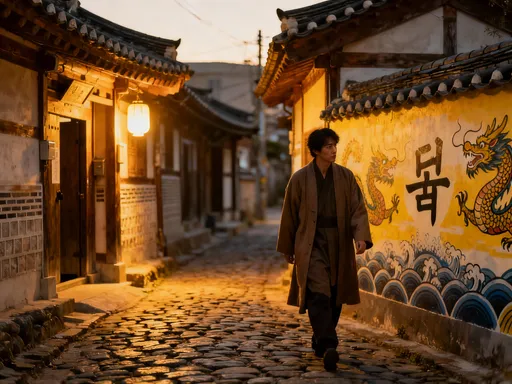
In the heart of Incheon’s Open Port District, nestled between colonial-era buildings and modern cafes, stand clusters of restored hanok—traditional Korean houses with tiled roofs, wooden beams, and inner courtyards. These homes, once abandoned or at risk of demolition, have been carefully preserved and adapted for contemporary use. Today, they serve as tea houses, craft workshops, and cultural experience centers, offering visitors a tactile connection to Korea’s architectural and artistic heritage.
One of the most inviting spots is a hanok-turned-tearoom where guests can sip traditional persimmon leaf tea while sitting on floor cushions in a sunlit room. The owner, a woman in her 50s, often shares stories about her grandmother’s tea rituals and demonstrates proper pouring techniques. Other hanok spaces offer hands-on activities like calligraphy, where visitors can dip a brush in ink and practice writing simple Korean characters, or traditional sweet-making, where rice flour and honey are shaped into delicate bites. These experiences are especially popular with women traveling solo or in small groups, offering both creativity and calm.
What makes these hanok villages remarkable is their balance of preservation and innovation. The original structures are maintained with historical accuracy—using traditional materials and methods—but the interiors are designed for comfort and accessibility. Some include modern restrooms, English signage, and quiet corners for reflection. This thoughtful adaptation ensures that heritage is not frozen in time, but lived and shared. Schools bring children for field trips; families gather for weekend tea ceremonies; international visitors leave with a deeper understanding of Korean aesthetics and values.
Visiting these spaces is more than a cultural tour—it’s an act of participation. Each cup of tea, each brushstroke, each shared story becomes part of the ongoing life of the hanok. For women who have spent years caring for others, these moments of mindful creation offer a rare kind of nourishment. Incheon’s hanok villages prove that tradition does not belong only to the past; it can be a living, breathing companion in the present.
Why These Hidden Venues Matter—And How to Visit Responsibly
The true value of Incheon’s hidden cultural gems lies not just in their beauty or history, but in the way they invite deeper connection. Unlike crowded tourist hotspots, these spaces allow for quiet reflection, personal discovery, and genuine interaction. They remind us that travel is not only about seeing new places, but about feeling them—through the texture of an old wall, the warmth of a shared meal, the silence of a temple garden. For women in their 30s to 55s, many of whom travel to recharge, learn, and reconnect with themselves, these experiences offer something rare: authenticity without performance.
But with access comes responsibility. These communities thrive because they remain untouched by mass tourism. To preserve their integrity, visitors should embrace slow, intentional exploration. This means moving at a gentle pace, speaking softly in residential areas, and always asking before taking photos of people or private spaces. It means choosing to support small businesses—buying tea from a local vendor, donating to an artist, or signing up for a workshop—rather than spending only in chain stores or tourist traps.
Respect for local customs is equally important. In temples, cover shoulders and speak quietly. In traditional homes, remove shoes before entering. In art spaces, listen more than you speak. These small acts of consideration go a long way in building trust and showing appreciation. They transform a visit from passive observation into meaningful exchange.
In the end, Incheon challenges the notion that great cultural experiences must happen in famous cities or grand monuments. Its quiet wonders—Wolmido’s alleys, Ganghwa’s stones, Dongincheon’s studios—are not loud or flashy, but they are profound. They ask us to look closer, listen more deeply, and travel with heart. So the next time you land in Incheon, don’t rush to the train. Stay. Wander. Let the city reveal itself, one hidden gem at a time. You might just discover that the most memorable journeys are not the ones that take you far, but the ones that bring you closer—to a place, and to yourself.