You Won’t Believe What I Found in Ålesund’s Hidden Art Corners
Nestled along Norway’s rugged coast, Ålesund isn’t just a postcard of Art Nouveau charm—its creative soul runs deeper. I went looking for beauty and stumbled upon something unexpected: intimate galleries tucked in old boathouses, murals whispering local stories, and studios where artists turn northern light into magic. This isn’t your typical tourist trail. It’s a quiet revolution of color and craft, waiting to be seen by those who wander with curiosity. What I discovered was not merely art on walls, but a living dialogue between landscape, history, and imagination—one that transforms a simple visit into a deeply personal journey. In a world where travel often feels predictable, Ålesund offers something rare: authenticity born not from performance, but from presence.
The Allure of Ålesund: More Than Just Pretty Architecture
Perched on a string of islands where the Norwegian Sea meets deep fjords, Ålesund rises like a dream carved in stone and light. Its skyline, crowned with onion-shaped turrets and ornate gables, is the legacy of a devastating fire in 1904 that razed the wooden town to the ground. In its place, Norwegian architects—many trained in Germany—rebuilt the city in the exuberant Art Nouveau style, giving Ålesund a fairy-tale elegance that draws photographers and architecture lovers from around the world. Pastel facades curve along narrow streets, each building adorned with floral motifs, dragon-like carvings, and intricate ironwork that glimmers in the coastal sun.
Yet beyond this picturesque surface lies a quieter, more enduring kind of beauty. The town’s dramatic geography—steep cliffs, churning tides, and ever-shifting skies—has long shaped the mindset of its people. Living at the edge of the sea demands resilience, but it also inspires a deep attunement to nature’s rhythms. This sensitivity finds expression not only in the town’s design but in its creative pulse. While most visitors climb the 418 steps to Fjellstua for the panoramic view, fewer pause to notice the hand-painted signs in alleyways or the small bronze sculptures tucked beside fishing docks. These are not afterthoughts; they are fragments of a living artistic tradition that thrives in the interstices of daily life.
What makes Ålesund unique is how seamlessly art integrates into its environment. Unlike cities where galleries are confined to polished districts, here creativity spills into unexpected corners. An old net mender’s shed becomes a printmaker’s studio. A former customs house hosts rotating exhibitions of textile art. This organic blending of function and expression suggests that in Ålesund, art is not an accessory to life—it is woven into its fabric. For the curious traveler, this means that discovery is not limited to designated attractions, but unfolds gradually, like a story whispered through gestures, colors, and textures.
Why Art Spaces Matter in Small Destinations
In an age of mass tourism, small towns like Ålesund face the challenge of preserving their identity while welcoming visitors. Art spaces play a crucial role in this balance, serving as cultural anchors that resist homogenization. Unlike souvenir shops selling imported trinkets, local studios and community galleries reflect the soul of a place—its memories, values, and evolving narratives. They are where heritage is not merely displayed, but reinterpreted through contemporary eyes. When travelers engage with these spaces, they move beyond observation into connection, encountering not just objects, but the people and stories behind them.
Grassroots art venues often operate on passion rather than profit. A ceramicist might spend weeks perfecting a glaze that mimics the gray-green of fjord water. A painter could layer dozens of translucent oils to capture the fleeting quality of Arctic twilight. These acts of dedication are rarely seen in commercial galleries, where speed and marketability often take precedence. By supporting independent artists, visitors contribute to a more sustainable form of tourism—one that values depth over convenience and meaning over memorabilia. The difference is palpable: a mass-produced magnet feels disposable, but a hand-thrown mug, etched with a wave pattern inspired by local folklore, carries a sense of belonging.
Moreover, these spaces foster intergenerational dialogue. In Ålesund, it’s not uncommon to see elders sharing fishing tales with young muralists, or children sketching alongside retired shipbuilders turned sculptors. Art becomes a bridge between past and present, allowing traditions to evolve without erasure. For families traveling with children, such encounters offer quiet lessons in patience, craftsmanship, and the dignity of making. They remind us that culture is not static—it breathes, adapts, and grows when nurtured by those who live it. In choosing to seek out these intimate venues, travelers become part of that continuity, even if only for a day.
Hunting for Hidden Studios: A Day Off the Beaten Path
One crisp morning, with the mist still clinging to the harbor, I set out without a map or itinerary. My goal was simple: to follow curiosity. I left the main square behind and wandered into the older districts, where narrow lanes slope down toward the water. Here, the buildings are lower, their facades weathered by salt and time. Above a family-run bakery, I spotted a small wooden sign painted with a brushstroke and the word Atelier. A flight of narrow stairs led up, and as I hesitated at the top, the scent of linseed oil and turpentine drifted through an open door.
Inside, a woman stood before a large canvas, her hands stained with cobalt and ochre. She welcomed me with a nod, explaining in gentle English that she opens her studio on weekends during summer. Her paintings—vast seascapes rendered in thick, emotional strokes—were inspired by the moods of the nearby Hjørundfjord. As we spoke, a fishing boat’s horn echoed from the bay below, its sound blending with the soft scratch of her palette knife. There was no price list, no sales pitch—just an invitation to witness creation in progress. Moments like these, unscripted and unhurried, are the heartbeat of Ålesund’s art scene.
Later that afternoon, I followed a trail of hand-lettered flyers advertising an open studio event. Tucked between a marina and a row of boathouses was a converted storage shed, its exterior covered in chalk drawings by local children. Inside, three artists shared the space: a glassblower shaping delicate vases with oceanic hues, a woodcarver chiseling a raven from pine, and a textile artist embroidering a sweater with a pattern based on old Norse knotwork. A kettle whistled in the corner, and visitors poured themselves tea from a communal pot. No entry fee, no rules—just the quiet hum of making and sharing. It was a reminder that art, at its core, is not about spectacle, but about presence.
From Murals to Metalwork: The Diversity of Local Expression
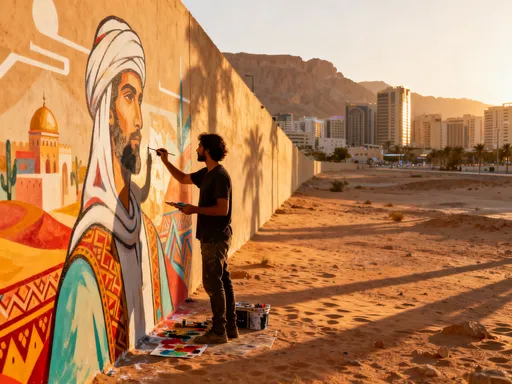
Ålesund’s artistic landscape is as varied as its coastline. While Art Nouveau defines its architectural identity, contemporary creators draw from a broader palette of influences—from Sami traditions to modernist abstraction. Public art, in particular, reveals this rich tapestry. On a side street near the old fish market, I came across a large mural depicting a woman in a traditional bunad holding a smartphone. The juxtaposition was playful yet profound, a nod to the town’s ability to honor heritage while embracing change. Painted in bold, graphic strokes, the image seemed to wink at passersby, inviting them to reflect on identity in a globalized world.
Near the waterfront, iron sculptures rise like silent sentinels. One piece, forged from reclaimed ship metal, resembles a Viking longship caught mid-sail, its form abstracted into sweeping curves and sharp angles. The artist, I later learned, was a former welder who began sculpting after retirement, using skills honed in shipyards to reinterpret local myths. These works do not shout for attention; they blend into the urban fabric, emerging subtly as one walks. A child might climb on a bronze codfish sculpture without knowing it’s art—yet that interaction is part of its purpose, dissolving the boundary between daily life and creative expression.
Textile art, too, holds a special place in Ålesund’s culture. In a small gallery near the harbor, I met a woman who weaves shawls using wool from local sheep, dyed with plants gathered from the surrounding hills. Her patterns combine ancient Norwegian symbols with modern geometry, creating pieces that feel both ancestral and fresh. She explained that each color has meaning—deep indigo for the midnight sky, rust red for autumn berries, pale gray for sea mist. To wear one of her shawls, she said, is to carry a piece of the landscape. This deep connection between material and place is a hallmark of Ålesund’s artistry—a reminder that creativity here is not imported, but grown from the soil, sea, and seasons.
How to Find These Spaces Without a Map
One of the joys of exploring Ålesund’s art scene is that it cannot be fully captured by guidebooks. The best discoveries happen through serendipity and local insight. A simple conversation over coffee can lead to a private studio visit. I found one of my favorite galleries after asking a barista where she bought the ceramic mug she was using. She smiled and pointed down a side alley, saying, “Third door on the left—her daughter made that.”
To increase your chances of meaningful encounters, start by visiting independent cafes, bookshops, and cultural centers. Bulletin boards in places like the Ålesund Cultural Center often list upcoming open studios, artist talks, and pop-up exhibitions. Timing your visit with local events can also open doors. The annual Ålesund Festival in July brings musicians, dancers, and visual artists into the streets, with many studios offering special tours. Similarly, the Christmas Market in December features handmade ornaments, knitwear, and ceramics from regional artisans, often sold directly by the makers.
Technology, when used thoughtfully, can also guide you. Instagram hashtags like #ÅlesundArt, #FjordArtists, and #NorwegianCraft frequently showcase current exhibitions and artist announcements. Many creators post about open house days or new works available for viewing. However, the real secret lies in slowing down. Put the phone away, walk without a destination, and let your eyes wander. Notice the details: a window display with a single painting, a doorway with paint-splattered steps, a garden with a sculpture half-hidden among flowers. These are the quiet signals of creativity at work. In Ålesund, the map is not in your hand—it’s in your attention.
Supporting Local Creativity: Ethical and Meaningful Engagement
When we enter the spaces where art is made, we hold a responsibility to do so with respect. Many studios in Ålesund are private homes or shared community spaces, not commercial galleries designed for foot traffic. A simple knock before entering shows consideration. If an artist is working, a quiet “Is it okay to look?” goes a long way. Some may welcome conversation; others may prefer silence. Both responses are valid, and honoring them strengthens the trust that makes these spaces possible.
Purchasing art directly from creators is one of the most impactful ways to support them. Even a small item—a hand-printed card, a miniature sculpture, a woolen coaster—carries more value than a generic souvenir. It ensures that the artist is fairly compensated and that tourism dollars stay within the local economy. When I bought a small linocut of a puffin from a young printmaker, she told me it was her first sale. That exchange, brief as it was, meant something to both of us. It wasn’t transactional—it was human.
Photography, too, requires mindfulness. Always ask before taking pictures of artists at work or inside their studios. A portrait of someone painting might seem harmless, but it can feel intrusive if unsolicited. Instead, focus on the art itself, or capture the atmosphere—the light through a north-facing window, the tools laid out on a workbench. These images, when shared, can inspire others to visit with intention. Ultimately, ethical engagement is about presence, not possession. It’s about leaving a place better than you found it—not by taking, but by acknowledging, appreciating, and contributing in quiet, meaningful ways.
Bringing It All Home: Why This Experience Stays With You
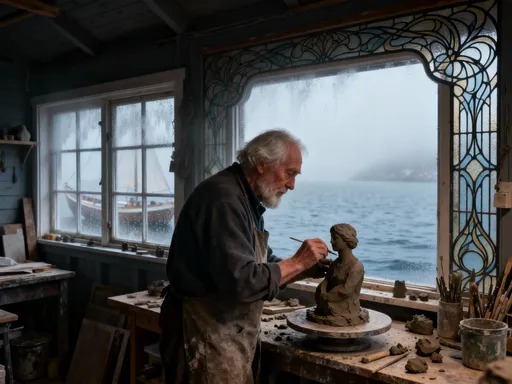
Months after my visit, I still think of the ceramicist whose hands moved with quiet certainty, shaping clay into form. I remember the hush inside the boathouse studio, broken only by the lap of waves. These moments did not come from ticking off landmarks, but from stepping off the path and into the rhythm of a place. What lingers is not just the beauty I saw, but the sense of connection—between artist and material, tradition and innovation, stranger and community.
In contrast to the curated perfection of major museums, Ålesund’s hidden art spaces feel alive. They are imperfect, intimate, and unpolished in the best way. There is no velvet rope, no timed entry, no audio guide. Just the raw, tender act of making. To witness that is to remember why we travel: not to collect experiences, but to feel them. These quiet corners, where culture is lived rather than performed, remind us that creativity is not reserved for the elite—it flourishes in kitchens, garages, and repurposed sheds, wherever curiosity and care meet.
So the next time you plan a trip, consider looking beyond the postcard. Seek the murals on forgotten walls, the studios with no signage, the artists who work because they must. In places like Ålesund, the true magic isn’t in the view from the top of the hill—it’s in the quiet moments below, where art and life breathe as one. Let your journey be guided not by algorithms, but by wonder. Because sometimes, the most unforgettable discoveries are the ones no one told you to find.